 REQUEST A FREE DEMO

The GCC Data Centre Boom: What It Means for Construction Suppliers
Across the GCC, a construction wave unlike any before it is underway. The driver is not a mega project in the traditional sense. It is data. AI infrastructure is now national policy in Saudi Arabia and the UAE, and the physical footprint required to support it is enormous. Data centres are no longer peripheral IT assets. They are being built to gigawatt scale, on 10-square-mile campuses, with power demands that rival small cities.
For construction suppliers, the implications are significant. This article breaks down five landmark projects currently shaping the GCC data centre pipeline and what the broader build-out means for the supply chain.
The Projects Driving the Pipeline
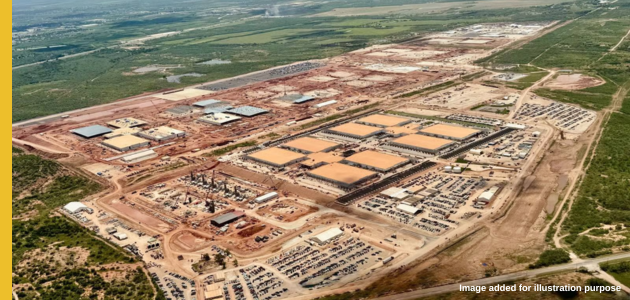
Stargate UAE, Abu Dhabi
In May 2025, OpenAI announced Stargate UAE, described as the world’s first Stargate facility outside the United States. The project is being built by G42 and operated by OpenAI and Oracle, with Nvidia, Cisco, and SoftBank as additional partners.
OpenAI has framed the project as regional infrastructure capable of serving nearly half the world’s population within a 2,000-mile radius.
Project Transcendence, Saudi Arabia
Saudi Arabia’s Public Investment Fund (PIF) has committed up to $100 billion to Project Transcendence, a government-backed initiative designed to position the Kingdom as a global leader in AI and cloud infrastructure.
The programme is structured to invest across data centre construction, AI startups, workforce development, and strategic partnerships with global technology firms. Google has committed between $5 billion and $10 billion to AI projects in the Kingdom under this initiative, with a focus on Arabic-language AI models.
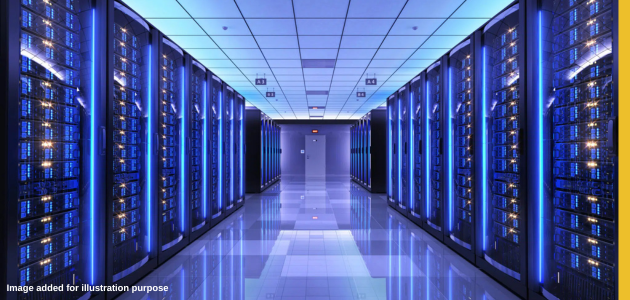
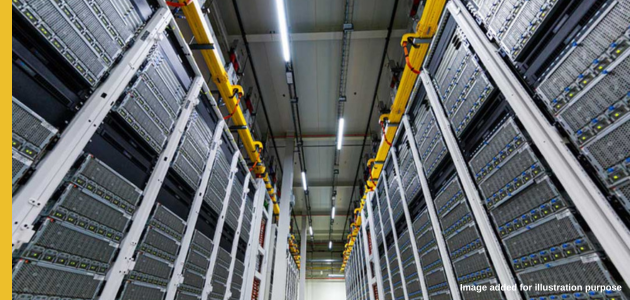
AI Data Centre at Birkat Al Awamer, Qatar
Qatar’s data centre ambitions are being advanced through the Birkat Al Awamer logistics zone in the Al Wakrah municipality, a 9.4 million square metre industrial park managed by Manateq. The zone has attracted investment in digital and AI infrastructure alongside its established logistics and manufacturing tenants.
The Qatar Investment Authority has also signalled AI-related fields, including data centres, as a priority investment category.
Du's AI Park, Warsan, Dubai
The park is designed to function as a sovereign AI hub, complying with all UAE national AI data and security policies. Beyond infrastructure, the facility will house AI research laboratories and startup incubator space, making it a mixed-use development with long-term anchor demand.
Du also signed a $544.54 million deal with Microsoft in April 2025 to develop a separate hyperscale data centre in the UAE, with Microsoft as the primary tenant.

Oracle Cloud Infrastructure (OCI), Riyadh
Oracle has committed $1.5 billion to expand its cloud infrastructure in Saudi Arabia, including the opening of its second public cloud region in the Kingdom, located in Riyadh.
Oracle has described the Riyadh expansion as a response to rapidly growing demand for AI and cloud services in the Kingdom, with the facility enabling organisations to access Oracle Cloud Infrastructure services for AI workloads, data analytics, and sovereign compute requirements.
What This Means for Construction Suppliers
The GCC data centre pipeline now spans more than 174 active and planned projects across Saudi Arabia, the UAE, Qatar, Oman, Kuwait, and Bahrain, with a combined value exceeding $93 billion.
Power and Electrical Infrastructure
AI workloads require significantly more power than traditional data centre configurations. Rack densities for new AI facilities now run between 15 and 50 kilowatts, compared with 5 to 8 kilowatts common five years ago. Campus-scale developments are targeting total power envelopes exceeding 100 megawatts. This translates into major scope for high-voltage utility interconnections, on-site substations, redundant distribution systems, and standby generation. Lead times for large generators, transformers, and switchgear are running at 12 to 18 months in the current market, making early procurement a critical factor in project delivery.
Cooling Systems
Desert climates make cooling a defining challenge for GCC data centre construction. Traditional air-cooled systems are giving way to liquid cooling, immersion cooling, and adiabatic-free cooling chillers to manage the heat loads generated by high-density GPU configurations. Regional developers are investing in water-efficient technologies given the energy intensity of desalinated water production. Suppliers with capability in advanced cooling system integration are well positioned as this segment of the build-out accelerates.
Modular and Prefabricated Construction
Speed-to-market pressure from hyperscalers is reshaping how data centres are built. Modular and prefabricated delivery models, where power skids, cooling assemblies, electrical rooms, and white-space modules are assembled off site and installed on site, are becoming standard practice. For suppliers, this creates demand for precision-fabricated components and tight coordination between off-site production and site installation schedules.
Civil and Structural Works
Campus-scale developments of the type being built across Abu Dhabi, Riyadh, and Dubai require substantial civil and structural scope, including ground preparation, reinforced structural frames capable of supporting high-load server halls, and extensive MEP coordination. The Birkat Al Awamer zone infrastructure programme alone covers 24 kilometres of road and drainage works. At the hyperscale end, each data hall building at Stargate’s US facilities runs to approximately 500,000 square feet, with multiple buildings per campus.
Cost Pressures and Supply Chain
Data centre construction costs are rising. The Data Centre Cost Index recorded a year-on-year cost increase of 9% across the 2024 index, up from 6% the prior year, with further upward pressure expected as liquid cooling requirements are factored into 2025 procurement. Steel price volatility, global demand outstripping supply chain capacity, and limited labour and contractor pools in some GCC markets are contributing factors. Suppliers entering this segment need to price for long-lead equipment and factor procurement risk into project timelines.
The Outlook
Middle East data centre capacity is projected to triple over the next five years, from 1 gigawatt in 2025 to 3.3 gigawatts. The projects announced across Abu Dhabi, Riyadh, Dubai, and Qatar are not speculative. They are backed by sovereign wealth funds, strategic partnerships with US technology firms, and national policy commitments with defined timelines.
For construction suppliers, the demand signal is clear. The materials, systems, and services required to build this infrastructure at scale are in sustained demand across the GCC. The firms that understand the technical requirements of AI-grade data centres, particularly around power density, cooling performance, and modular delivery, will be well positioned to capture a share of one of the region’s most significant infrastructure build-outs.
Ventures Onsite is tracking these major projects and many more, if you would like to find out more on how you can subscribe to receive access to project data, please contact us.